


Drying clothes indoors without damp
Drying clothes outdoors is not always realistic in Ireland. Once autumn arrives, shorter days and unpredictable showers can leave washing hanging around the house for hours. Indoor drying is convenient, but wet laundry releases moisture into the room. If that moisture has nowhere to go, it can settle on cold windows and walls as condensation.
The good news is that you do not have to choose between damp laundry and a damp home. A few changes to your routine—and the right appliance when you need it—can help clothes dry more quickly while keeping excess moisture under control.
1. Remove as Much Water as Possible First
Start by choosing the highest spin speed that is suitable for the fabric. The drier the clothes are when they leave the washing machine, the less moisture must evaporate into your home. For heavy cottons, towels and bedding, an additional spin cycle can make a noticeable difference.
Do not overload the washing machine. Clothes need space to move during both washing and spinning, and a tightly packed drum may leave a load wetter than expected. Always check the care labels before using a high spin speed with delicate garments.
2. Choose One Well-Ventilated Room
Rather than spreading wet laundry around several rooms, keep it in one suitable space where you can manage the moisture. A utility room, spare room or bathroom with an opening window or working extractor fan can be a good choice. Keep internal doors closed so moisture does not travel through the rest of the house.
Ventilation matters even in cool weather. If conditions allow, open a window slightly or use an extractor fan. Avoid placing an airer directly against an outside wall, as colder surfaces are more likely to collect condensation.
3. Give Every Garment Space
Clothes dry faster when air can circulate around them. Shake out each item before hanging it and leave a small gap between garments. Put heavier pieces on the outside of the airer, turn thick items during drying and avoid folding towels over several bars.
Hanging shirts and tops on clothes hangers can create more space on the airer and reduce creasing. If you use a fan to improve circulation, keep it in a stable position and follow its operating instructions.
4. Use a Dehumidifier to Capture Moisture
A dehumidifier draws moisture from the room air and collects it in a tank or carries it away through a suitable continuous-drain connection. This makes it particularly useful when laundry must be dried indoors regularly.
Position the dehumidifier in the same closed room as the airer, leaving the clearances recommended by the manufacturer. Do not push it against laundry or cover its air inlet or outlet. Some models include a dedicated laundry setting designed to run continuously or at a higher fan speed while clothes are drying.
At Appliances Delivered, the dehumidifier range includes De’Longhi Tasciugo AriaDry models such as the DEX212SF and DEX216RF. Compare moisture-removal capacity, tank size, noise level and available operating modes before choosing.
5. Know When a Tumble Dryer Makes More Sense
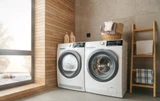
A dehumidifier works well with an airer, but a tumble dryer may be the more practical choice for frequent family-sized loads, towels and bedding. Heat-pump tumble dryers reuse warm air within the drying process and generally dry at lower temperatures than traditional condenser or vented models. Cycles can take longer, but the gentler temperature and reduced energy use can make them an attractive long-term option.
Look for sensor drying, which monitors the load and stops the programme when the selected dryness level has been reached. This helps avoid running the appliance longer than necessary. Capacity matters too: an 8kg dryer may suit many households, while larger families may benefit from a 9kg or 10kg model.
Explore heat-pump tumble dryers from Bosch, Electrolux, Hotpoint, Whirlpool, NordMende and more, or view the complete tumble dryer collection.
What Not to Do When Drying Clothes Indoors
- Do not drape wet clothing over a portable heater or radiator.
- Do not block heater vents or place an airer within the heater’s required clearance area.
- Do not dry laundry in an unventilated bedroom overnight.
- Do not ignore recurring condensation, musty smells or visible mould.
- Do not use a dehumidifier in a bathroom unless the manufacturer specifically states that the model and location are suitable.
A Simple Indoor-Drying Routine
- Use a suitable high-spin programme or add an extra spin.
- Hang clothes promptly and leave space between items.
- Keep the laundry in one ventilated room.
- Run a correctly positioned dehumidifier and close the room door.
- Empty the tank when indicated and turn thick garments halfway through.
With the right setup, indoor drying can be much more manageable throughout the Irish autumn and winter. Shop dehumidifiers, tumble dryers and washer dryers at AppliancesDelivered.ie.
Recent Posts
-

How to Choose the Right Home Appliances in Ireland: A Room-by-Room Guide
Kitting out a home is a big spend, often made in a rush when something breaks. A room-by-room approa …12th Oct 2026 -
DeLonghi Appliances Ireland: A Complete Buyer's Guide
Few brands look at home in both a sleek city apartment and a busy family kitchen. DeLonghi in Irelan …6th Oct 2026 -
Best Matching Kettle and Toaster Sets in Ireland 2026
A worktop looks instantly tidier when the small appliances actually go together. That is the simple …1st Oct 2026