

What Temperature Should Your Fridge Be?
Your fridge works around the clock to keep food fresh, chilled and safe to eat. But when the temperature is set too high, food may spoil more quickly. Set it too low and items at the back of the fridge can begin to freeze.
So, what temperature should a fridge be, which setting should you use, and how can you check that your appliance is cooling properly?
This guide from AppliancesDelivered.ie explains everything you need to know.
What Is the Ideal Fridge Temperature?
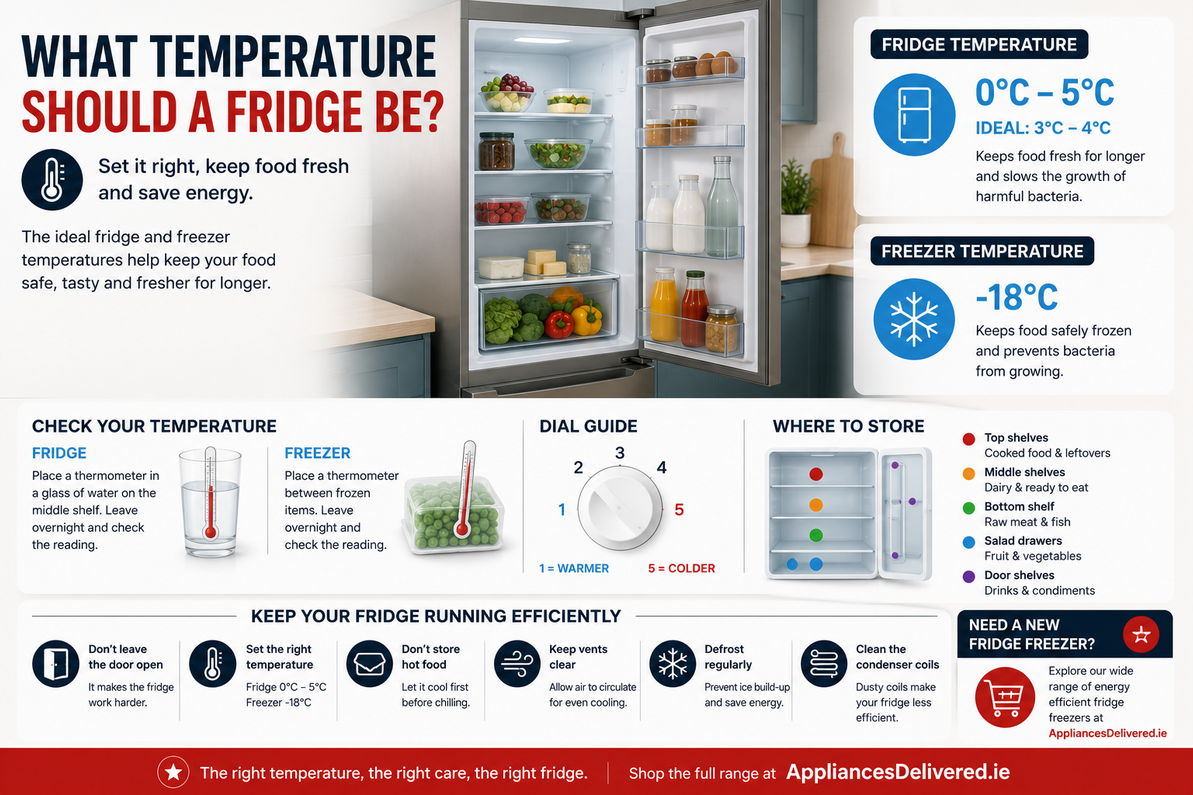
Your fridge should keep food at a temperature between 0°C and 5°C. Setting the appliance to approximately 3°C or 4°C will generally help keep food safely within that range.
Keeping food properly chilled slows the growth of bacteria and helps fresh food remain safe and enjoyable for longer. If the temperature rises above 5°C for an extended period, perishable food may no longer be safe to eat.
What Temperature Should a Freezer Be?
A domestic freezer should normally be kept at -18°C or colder. At this temperature, food remains safely frozen and can be stored for longer periods, depending on the product and your freezer’s star rating.
Which Number Should Your Fridge Be Set To?
Many fridges use a numbered dial instead of showing the actual temperature.
On most models, a higher number means a colder setting. However, the numbers do not usually represent specific temperatures, and the exact operation can vary between appliances.
Rather than relying on the dial alone:
- Start with a middle setting.
- Allow the fridge time to settle.
- Check the internal temperature with a fridge thermometer.
- Adjust the dial gradually until the temperature remains between 0°C and 5°C.
Always check your appliance manual, particularly if the controls are not clearly labelled.
How Long Does a Fridge Take to Adjust?
After changing the temperature setting, allow up to 24 hours for the fridge to stabilise before checking it again.
Opening the door frequently, adding a large grocery shop or placing warm food inside can temporarily increase the internal temperature.
How to Check Your Fridge Temperature
A fridge thermometer is the easiest way to check whether your appliance is cooling correctly.
For an accurate reading:
- Place a non-mercury fridge thermometer in a glass of water.
- Put the glass on the middle shelf.
- Leave it in place overnight.
- Check the reading when you first open the fridge door.
The water provides a steadier measurement than the changing air temperature inside the cabinet. The Food Safety Authority of Ireland recommends using a non-mercury thermometer to check the exact temperature.
How to Check Your Freezer Temperature
Place a suitable freezer thermometer between two bags or containers of frozen food and leave it undisturbed overnight.
The temperature should read -18°C or colder.
Where Is the Coldest Part of a Fridge?
The temperature can vary across different parts of your fridge.
The lower shelves are often colder than the upper shelves, while the door is usually the warmest area because it is exposed to room temperature whenever the fridge is opened.
A practical storage layout is:
- Upper shelves: cooked food and ready-to-eat items
- Middle shelves: dairy products and leftovers
- Lower shelf: covered raw meat and fish
- Salad drawers: fruit and vegetables
- Door shelves: drinks, condiments and less temperature-sensitive products
Always follow the storage instructions printed on food packaging.
Why Is Food Freezing in the Fridge?
Food may begin freezing when:
- The temperature is set too low
- Items are pushed against the cold back wall
- Air vents are blocked
- The fridge is almost empty
- The thermostat or temperature sensor is faulty
Move food slightly forward, check that air can circulate around the cabinet and increase the temperature setting by one step. Allow 24 hours before checking again.
Why Is the Fridge Not Cold Enough?
A fridge that feels too warm may be caused by something simple, such as an open door or overloaded shelves, but it can also indicate a fault.
Start by checking:
- The temperature setting
- Whether the door closes fully
- The condition of the door seal
- Whether internal vents are blocked
- Whether the fridge has enough ventilation around it
- Whether warm food was recently added
- Whether the appliance is positioned near an oven or radiator
Do not pack food tightly against the interior walls, as cold air needs room to circulate.
Signs Your Fridge May Not Be Working Properly
Watch for the following warning signs:
Food Spoils Too Quickly
Milk, meat or other fresh products going off before their use-by date may mean that the fridge is not maintaining a safe temperature.
Excessive Frost or Ice
A heavy frost build-up can affect airflow and may point to a blocked drain, damaged seal or defrosting issue.
Condensation Around the Door
Moisture around the door or outside the cabinet can indicate that warm air is entering through a damaged or dirty seal.
Unusual Noises
A gentle hum is normal. Repeated knocking, clicking, rattling or grinding may require professional attention.
The Fridge Feels Warm
If the appliance remains above 5°C after checking the settings and door seal, contact a qualified repair technician.
Common Fridge Temperature Problems
Ice Building Up Inside
Check that food is not touching the back wall and that the drainage channel is clear.
Some blockages can be cleared gently with warm water, but always follow the manufacturer’s instructions before removing panels or attempting a repair.
Fridge Cycling On and Off Frequently
Frequent cycling may be caused by:
- A damaged door seal
- Poor ventilation
- Dust around accessible condenser areas
- A very low temperature setting
- A warm room
- A mechanical fault
Keep the appliance ventilated and avoid placing it directly beside a heat-producing appliance.
Fresh Food Compartment Feels Warm
Check that the internal vents are not covered by food. If the freezer is working but the fridge section remains warm, there may be an airflow or fan problem requiring professional repair.
Water or Ice on the Fridge Floor
This can be caused by a blocked drainage channel or water outlet. Consult the manual before attempting to clear it.
How to Keep Your Fridge Working Efficiently
A few simple habits can help your fridge maintain a steady temperature and reduce unnecessary energy use.
Set the Correct Temperature
Keep the fridge between 0°C and 5°C and the freezer at -18°C or colder.
Avoid Leaving the Door Open
Decide what you need before opening the fridge, particularly during warm weather.
Check the Door Seal
Clean the seal regularly and inspect it for cracks, gaps or warping.
Cool Food Safely Before Refrigerating
Cooked food should be cooled promptly and refrigerated within two hours. Do not leave it sitting out until it is completely cold, and divide large dishes into smaller portions to help them cool more quickly.
Keep Food Covered
Covered food is protected from contamination and releases less moisture into the fridge.
Do Not Block Air Vents
Leave space around food so cold air can circulate freely.
Avoid Overfilling
An overcrowded fridge may struggle to cool evenly. However, a completely empty fridge can also experience greater temperature changes.
Defrost When Necessary
If your model is not frost-free, defrost it when ice begins to build up significantly.
Leave Ventilation Space
Follow the manufacturer’s installation instructions regarding clearance around the sides, top and rear of the appliance.
Keep It Away From Heat
Where possible, avoid positioning your fridge directly beside an oven, radiator or in strong sunlight.
What Should You Do After a Power Cut?
Keep the doors closed as much as possible and check the fridge and freezer temperatures when the electricity returns.
Food stored in the fridge should remain between 0°C and 5°C. If chilled food has been above 5°C for a substantial period, it may need to be discarded. When in doubt, prioritise safety and do not taste food to decide whether it is safe.
Is It Time for a New Fridge Freezer?
A replacement may be worth considering when:
- The appliance can no longer stay below 5°C
- Food frequently freezes or spoils
- The door seal is badly damaged
- Frost returns soon after defrosting
- Repairs are becoming frequent
- The fridge runs continuously
- You need more storage space
- Your current appliance no longer suits your household
AppliancesDelivered.ie stocks freestanding, integrated and American-style fridge freezers, with current ranges including brands such as Bosch, Whirlpool, Hotpoint, Indesit, Electrolux, Samsung, Fisher & Paykel, Belling, Servis and PowerPoint. Availability varies by category and stock.
Find Your New Fridge Freezer at AppliancesDelivered.ie
Whether you need a compact freestanding model, a seamless integrated fridge freezer or an American-style appliance with extra capacity, AppliancesDelivered.ie has options for kitchens of every size.
Explore the full range and compare capacity, dimensions, energy ratings, storage layouts and frost-free features before choosing the right model for your home.
Related Guides
- The Ultimate Fridge Freezer Buying Guide
- Why Is My Fridge Freezing Food?
- How to Organise Your Fridge Properly
- Frost-Free Fridge Freezers Explained
Recent Posts
-

Samsung Autumn Cashback: Get Up to €140 Back
Upgrade Easier: Claim Up to €140 Cashback on Selected Samsung Galaxy Devices Thinking about upgradin …18th Sep 2026 -
Everyday mess. Meet Shark.
Make Light Work of Everyday Mess with Shark Muddy shoes in the hallway, pet hair on the sofa and cru …18th Sep 2026 -
Planning a Home Upgrade? Get Up to €1,200 Miele Cashback
A kitchen renovation starts with plenty of decisions. Which oven will suit your cooking? How much fr …18th Sep 2026